How I built this website with AI

My old portfolio ran on WordPress and a page builder. I rebuilt it from scratch in code with Claude Code: I set the direction, the references and the quality bar, and reviewed every step in the browser.

Role
Design, art direction, content, review
AI
Claude Code
Stack
Astro, GitHub, Cloudflare Workers
Timeline
Oct – Nov 2026
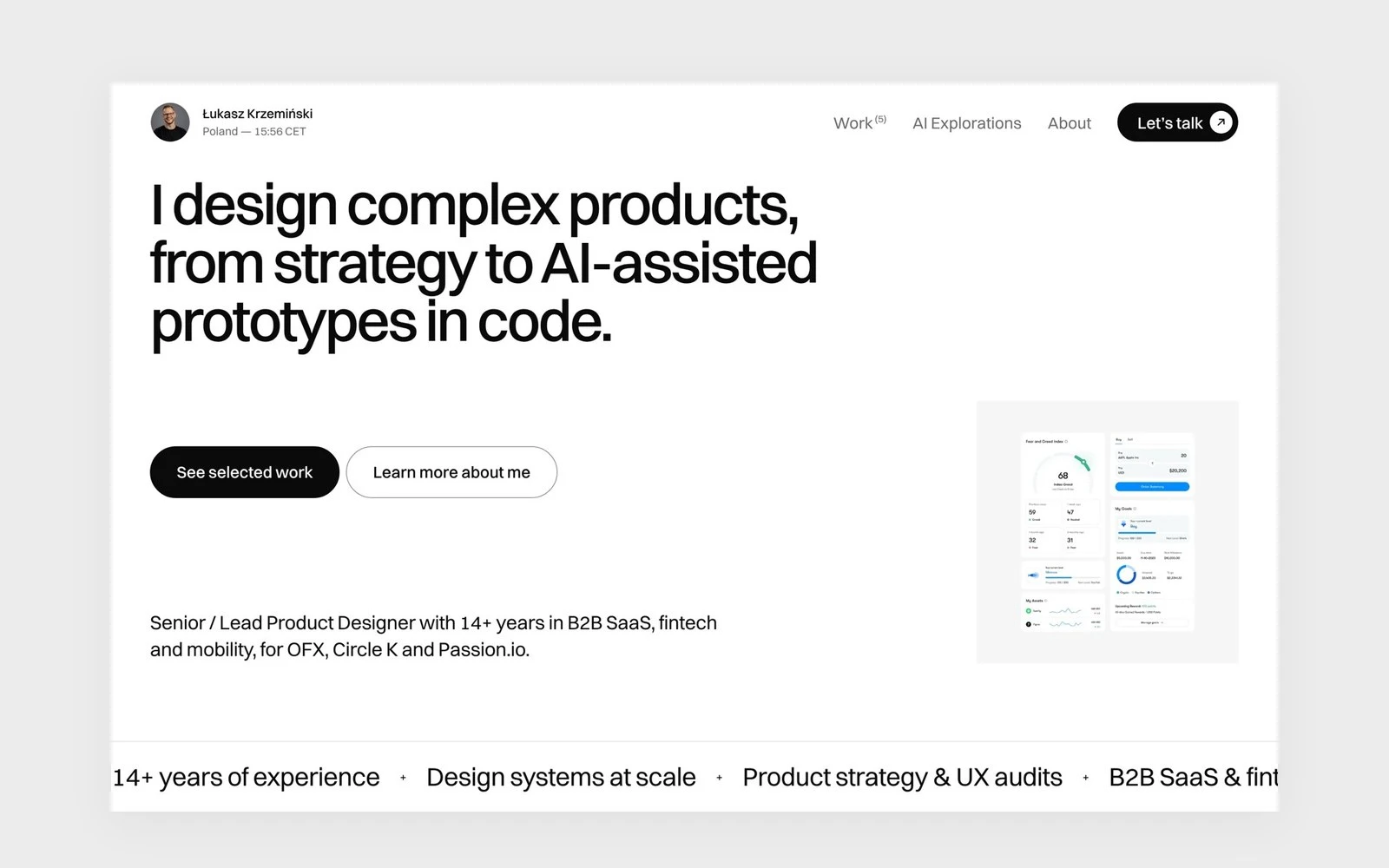
Homepage of lukaszkrzeminski.com
3 weeks
from the first commit to the new design live
160+
commits, reviewed on live previews
5
case studies rewritten with AI as a UX writer

Why rebuild

The old site looked fine, but it didn’t show how I work today. A page builder limited the layouts, motion and performance I wanted, and every change meant fighting the tool.

The headline on my homepage says I go from strategy to AI-assisted prototypes in code. This website is the proof: designed in detail, built in code, and shipped with AI.

How we worked

I worked like an art director with a very fast developer. For each part of the site I gave Claude Code a goal, a reference and constraints, for example the project grid after christopherdoyle.co, the text reveals after aat-architecten.be or the CV layout after gkvasnikov.com.

  • Claude Code wrote the code, built the site and checked it in a headless browser with screenshots on desktop and mobile.
  • Every change went to a live preview, where I reviewed it and gave precise feedback: spacing, alignment, timing, copy.
  • Only approved changes were merged and published to the main domain.
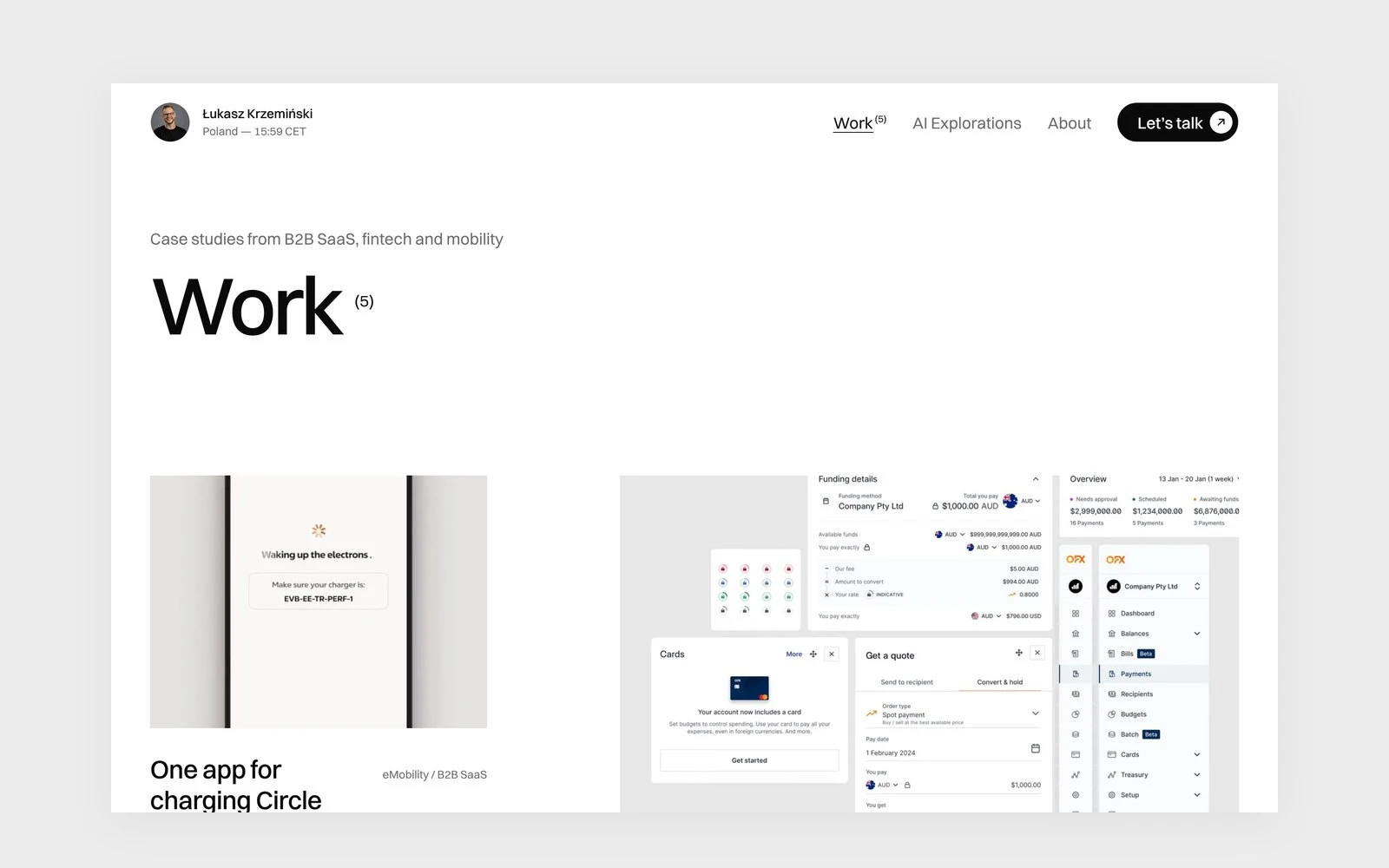
Work page with case study cards

The Work page, with cards alternating between small and large.

Stack

  • Astro for a fast, static site with reusable components and design tokens ported from the old site.
  • GitHub and Cloudflare Workers for automatic builds, with a separate preview for every branch.
  • A small WordPress snippet that serves the new pages on the existing domain, so I could migrate page by page.
  • Cloudflare Web Analytics for cookie-free, anonymous visit statistics.

Content

I used Claude as a senior UX writer. It reviewed every case study, asked me about my role, the team and the results, and rewrote the copy around facts. Company figures are labelled as context, not as my own results.

For two cases, workshop findings lived only in old FigJam files. Claude Code decoded the files and pulled out the sticky notes, so the research sections are based on what actually came out of the workshops.
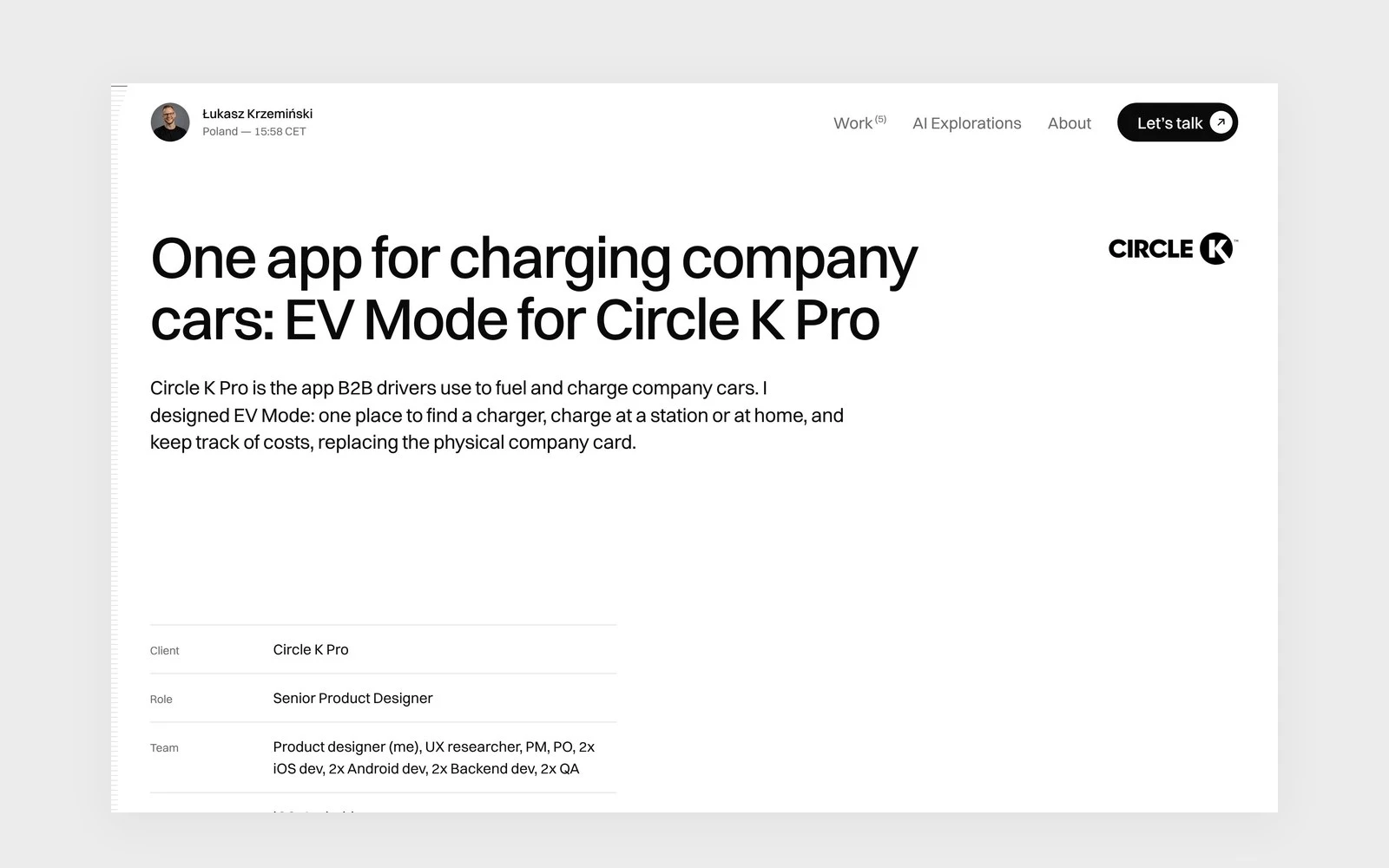
Circle K case study page

One template for all case studies.

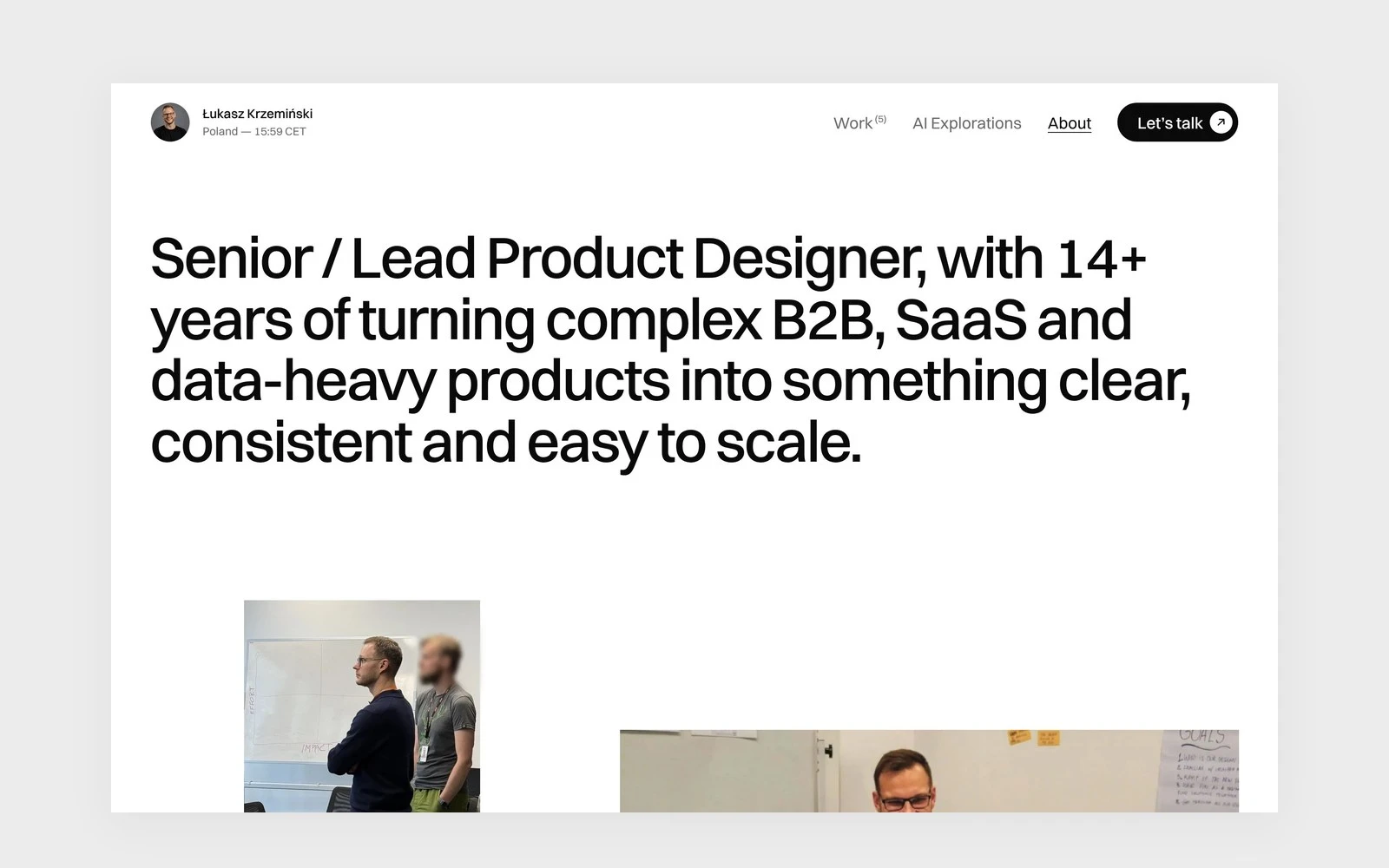
About page with career history

About page with a CV-style career history.
What I learned

  • AI speeds up building, but taste and decisions stay with the designer. The quality of the result depends on the quality of the feedback.
  • A good reference and a precise note about what to change work better than a long prompt.
  • Reviewing in the real medium catches what Figma hides: motion, responsive edge cases and performance.

Next up

Explore more explorations

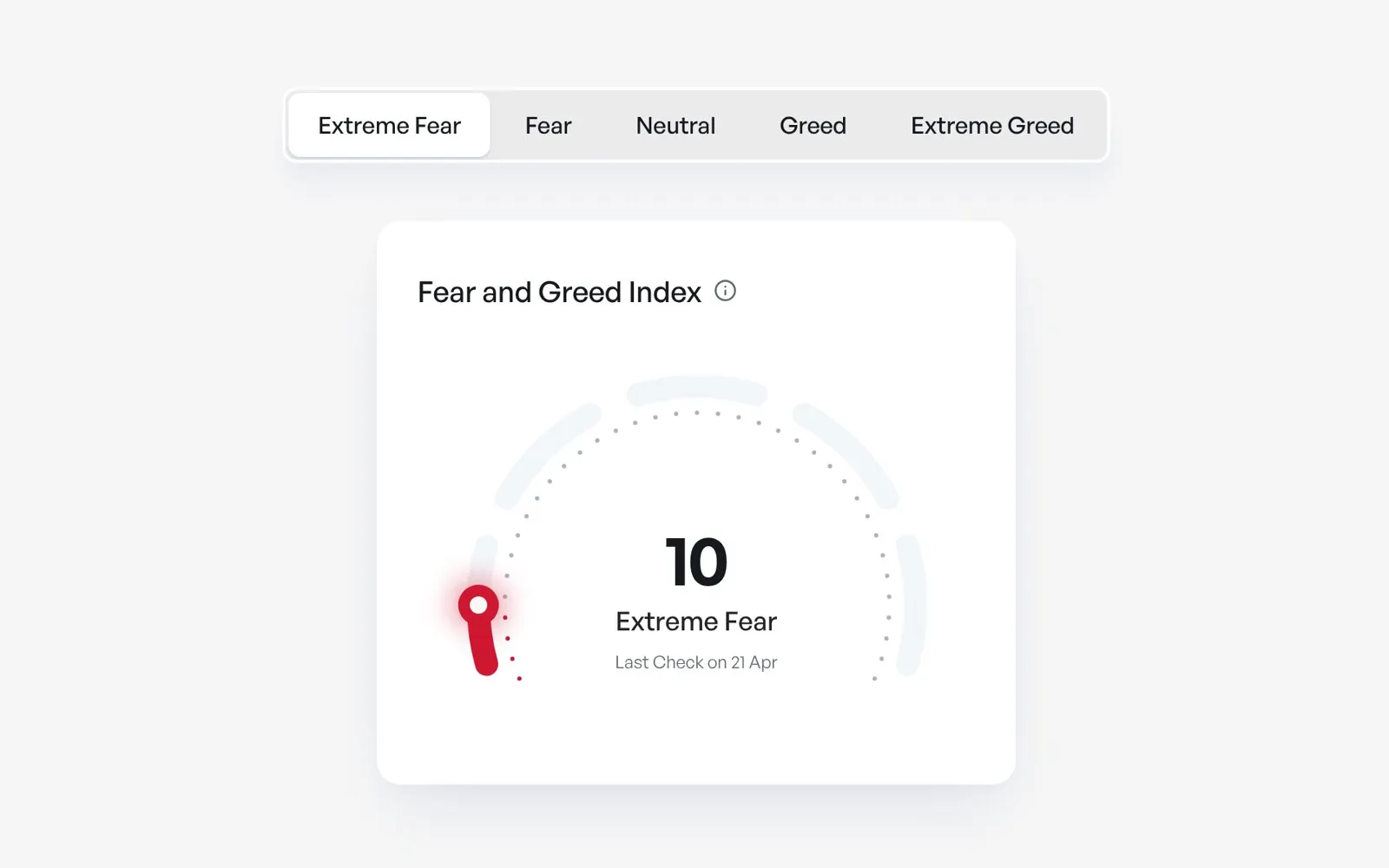
  1. 01Fear and Greed IndexClaude Code1 hour
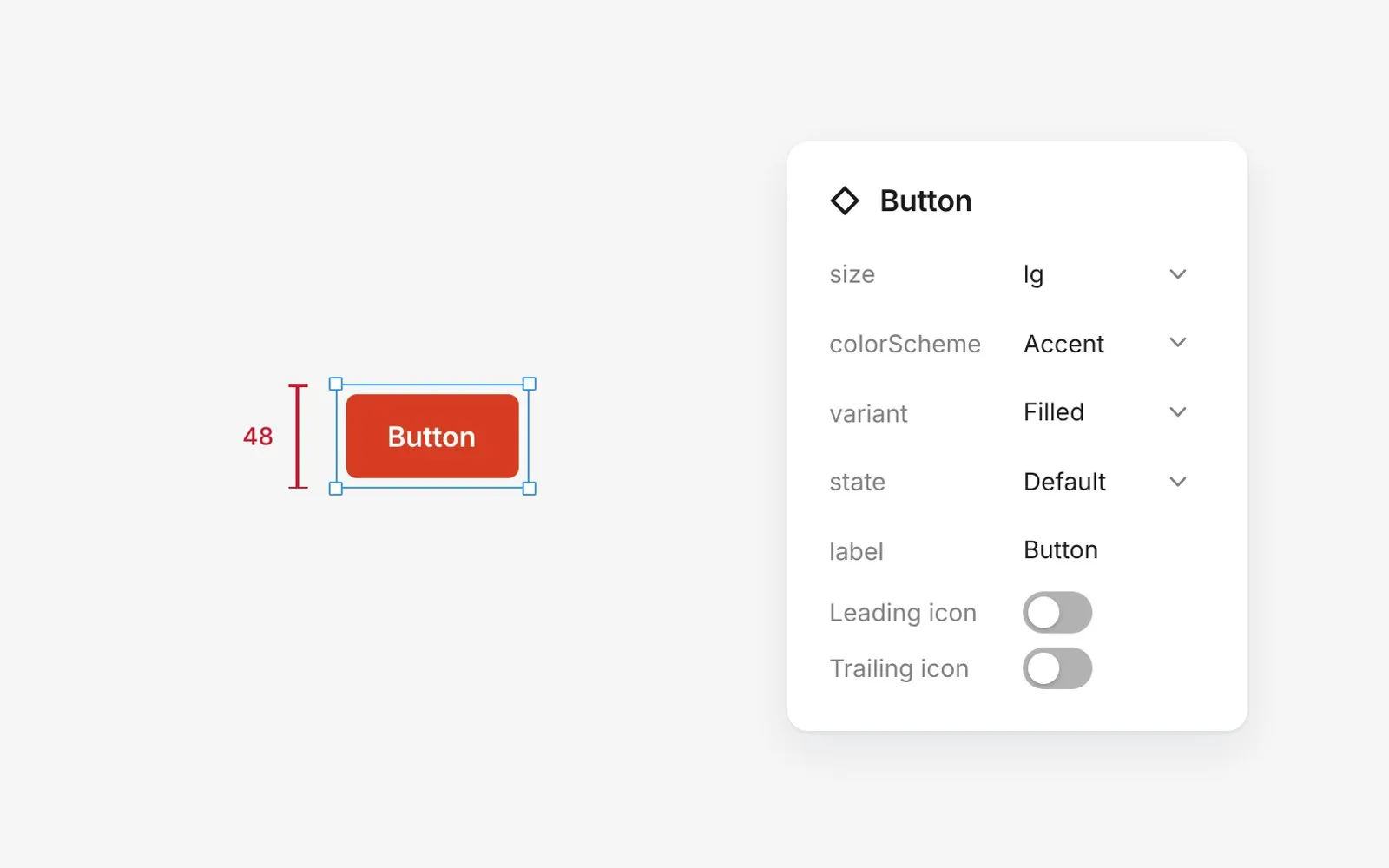
  2. 02Button componentClaude Code1 hour
See all AI explorations